Killing of Iran’s supreme leader has triggered a chain reaction of explosions, drone attacks, and urgent diplomatic warnings that now stretch from the Persian Gulf to Israel and Iraq.
The Middle East woke up to a second straight day of blasts and sirens on Sunday, March 1, 2026. And this time, Iran’s neighbors are running out of patience.
What began as Iranian retaliation for the joint U.S.-Israeli operation that killed Supreme Leader Ali Khamenei has rapidly expanded into a multi-front crisis, with explosions reported in Saudi Arabia, the United Arab Emirates, Qatar, Bahrain, and even Oman. Oman is a country long regarded as one of the few neutral brokers in the region.
The UAE Draws a Line
Perhaps the most pointed response came from the United Arab Emirates, where senior presidential adviser Anwar Gargash delivered a sharp public rebuke of Tehran’s actions. Speaking on Sunday, Gargash argued that Iran had committed a serious strategic blunder by directing strikes at Gulf states that have no direct involvement in the original conflict.
“Your war is not with your neighbors,” Gargash said, urging Iranian leadership to step back from the edge before the situation becomes irreversible.
It was a message wrapped in diplomacy but carrying the unmistakable weight of warning: the Gulf states are watching, they are united, and they will not quietly absorb attacks intended for someone else.
What’s Actually Happening on the Ground
The past 48 hours have painted a chaotic picture across the region:
In Saudi Arabia, residents of eastern Riyadh reported hearing multiple explosions on Sunday morning, with plumes of smoke rising over the capital. The strikes represent a significant escalation given Riyadh’s enormous geopolitical weight.
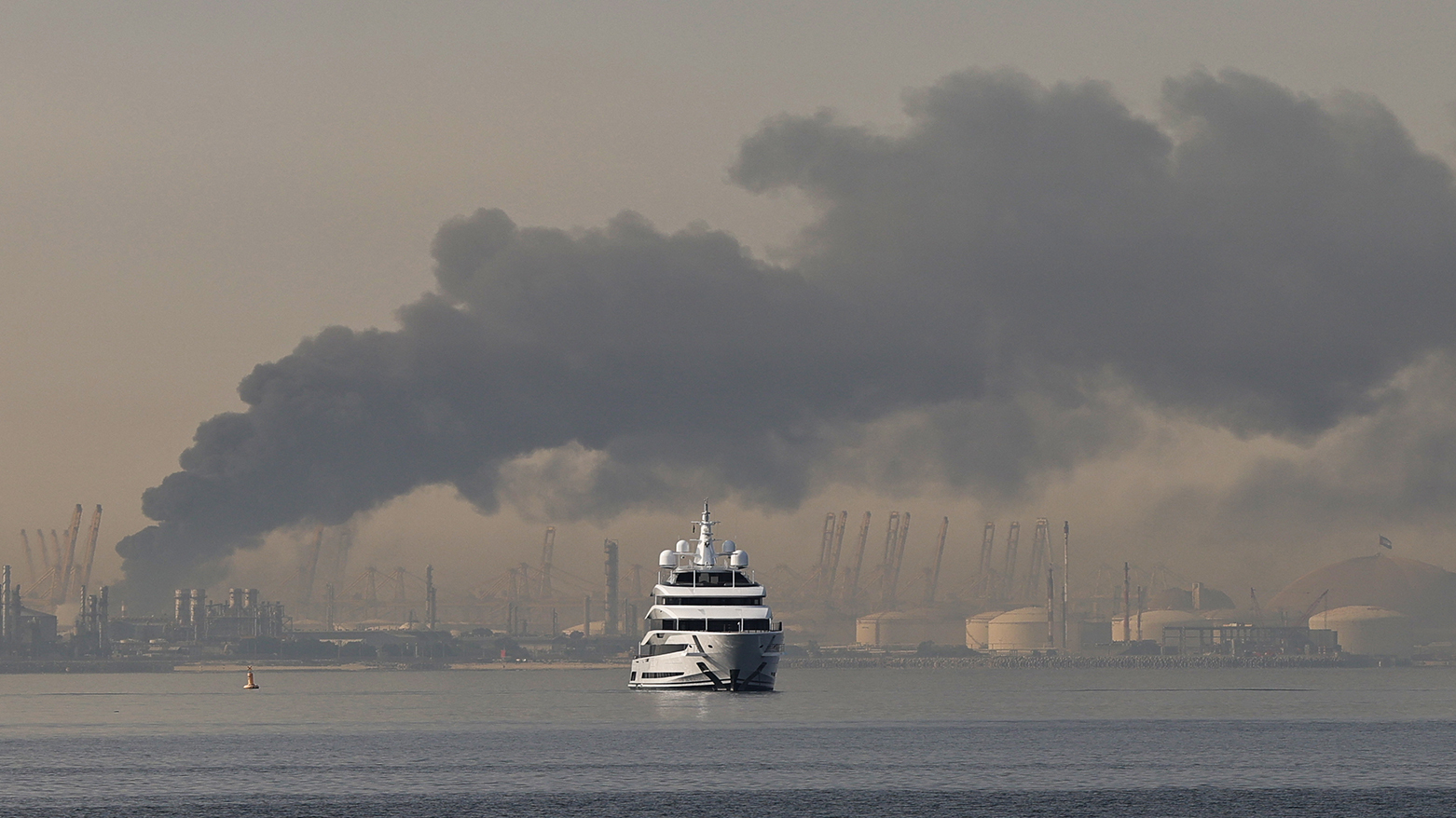
In the UAE, a second wave of blasts struck Dubai, following initial explosions the day before. Satellite images reportedly showed smoke rising near the port of Jebel Ali, one of the busiest commercial ports on earth, raising fears about disruption to global trade routes.
In Qatar, thick black smoke hung over the southern part of Doha after strikes believed to be aimed at U.S. military infrastructure in the region. Qatar hosts the largest American air base in the Middle East.
In Bahrain, the damage turned personal. A well-known hotel in Manama, the Crowne Plaza, was confirmed hit during the Iranian strikes, leaving guests injured and the surrounding area damaged. The U.S. Embassy there wasted no time warning American citizens to stay away from hotels in the capital entirely.
In Oman, a country that has spent years quietly facilitating back-channel talks between Washington and Tehran, drones struck the commercial port of Duqm, injuring at least one foreign worker. It was the first time Oman had been struck since the retaliatory campaign began, and it sent a jarring message: no neutral ground is safe.
US Embassies Go Into Emergency Mode
American diplomatic outposts across the region shifted into protective posture throughout the day.
The U.S. Embassy in Muscat, Oman’s capital, ordered both staff and American citizens to shelter in place. Similar instructions came from Amman, Jordan, where embassy personnel were told to stay away from the compound entirely amid fears of targeting.
None of these are routine precautions. Shelter-in-place orders at embassies signal a credible and immediate threat, the kind of language Washington reserves for situations it takes very seriously.
The War Reaches Iraq and Israel Too
Iran’s strikes were not limited to Gulf states.
In northern Iraq, specifically in the Kurdistan Region, American defense systems shot down at least two drones approaching Erbil, home to the U.S. consulate, as air raid sirens blared across the city. Iranian military officials confirmed they had deliberately targeted U.S. bases in the area.
Meanwhile, air raid sirens sounded in Tel Aviv. Israeli air defenses successfully intercepted incoming missiles, though at least one person has reportedly died in Israel since the Iranian campaign launched.
Iranian state media claimed the strikes had hit 27 separate U.S. bases across the region, in addition to Israeli military command centers and a defense manufacturing complex in Tel Aviv.
Speaking on the ground near a missile impact site in Tel Aviv, Israeli President Isaac Herzog offered a defiant but forward-looking statement. He framed the conflict not as destruction, but as a painful yet necessary step toward reshaping the Middle East, one that he believes could ultimately bring a new era of stability and even peace.
Iran’s Allies Watch and Some Are Ready to Move
The wider Iranian-aligned network is paying close attention.
In Lebanon, Hezbollah chief Naim Qassem vowed that his movement would stand firm in confronting both the United States and Israel, though the group has not yet launched direct military operations. Lebanon’s prime minister, Nawaf Salam, was quick to clarify that Lebanon itself has no interest in being pulled into this war.
Hamas, the Palestinian militant group, publicly mourned the death of Khamenei, describing him as a steadfast supporter of the Palestinian resistance. The group’s military wing, the al-Qassam Brigades, honored Khamenei as the principal backer of the so-called Resistance Axis, the network of armed groups stretching from Gaza to Lebanon to Yemen that Iran has long funded and armed. Islamic Jihad echoed similar condemnations.
The fact that these groups are voicing solidarity matters. Whether that solidarity translates into action could determine just how wide this war becomes.
Who Will Lead Iran Now?
Back in Tehran, the government moved quickly to prevent a leadership vacuum from compounding the military crisis.
Ayatollah Alireza Arafi was appointed to an interim leadership council, which is now governing Iran alongside the president and the head of the judiciary. The council is considered a temporary arrangement while the Assembly of Experts, Iran’s clerical body responsible for selecting supreme leaders, deliberates on a permanent successor to Khamenei.
Choosing the next supreme leader during an active, escalating war is an extraordinary and historically unprecedented challenge. The decision will shape not only Iran’s domestic future but its entire foreign and military posture for decades.
The Bigger Picture
What we are witnessing is not simply a military exchange. It is the rapid unraveling of a regional order that has been fragile for years.
For decades, Gulf states maintained a careful, often uneasy coexistence with Iran, trading cautious diplomacy for a degree of stability. That arrangement is now under severe stress. Neutral countries like Oman are being struck. Hotel guests in Bahrain are being injured. Shipping infrastructure in Dubai is producing smoke columns visible from the sea.
If there is a single thread running through all of it, it is this: the death of one man, Iran’s supreme leader, has lit a fuse that no one on any side seems fully equipped to extinguish.
Diplomatic channels are strained. Civilian populations are exposed. And the world is watching to see whether the warnings coming out of Gulf capitals will be enough to pull Tehran back from a path that its neighbors are now openly calling a catastrophic miscalculation.This article is based on verified reports from regional correspondents and official statements as of March 1, 2026. The situation remains fluid and is actively developing.
About the Author