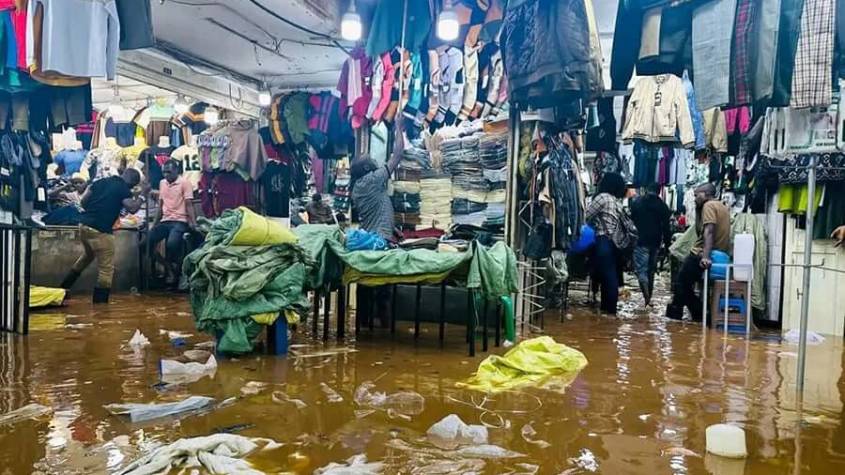
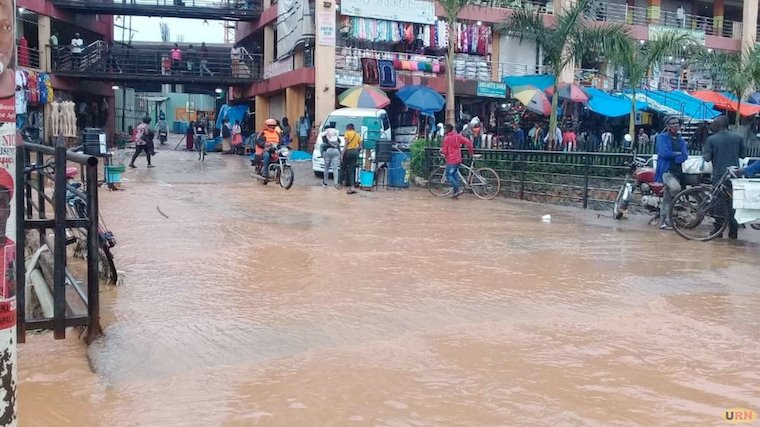
Downtown Kampala was hit by severe flooding yesterday afternoon following an intense downpour on March 6, 2026. Water inundated streets, arcades, and businesses in key areas including Nakivubo, Ben Kiwanuka Road, Nabugabo Street, and surrounding plazas, disrupting daily life and causing significant economic damage to traders.
The heavy rainfall turned roads into rivers, with murky water entering shops and arcades, ruining merchandise such as clothing, electronics, and other goods. Traders reported substantial losses, as many had stocked up ahead of the season only to see their investments submerged. Residents and pedestrians waded through knee-deep or higher water, while transport services, including boda bodas, came to a halt in affected zones.
This latest incident has reignited public debate over the ongoing redevelopment of the Nakivubo Channel, spearheaded by businessman Hamis Kiggundu. The project aims to upgrade the city’s primary stormwater drainage system, including widening sections, adding culverts, and constructing commercial structures above parts of the channel. Proponents argue that the works, now reportedly over 16% complete with full completion targeted for late 2026, will ultimately improve drainage and modernize the area.
However, critics including traders, engineers, and residents point to the construction as a contributing factor to worsened flooding. They claim that partial covering of the channel and construction activities have reduced water flow capacity or created temporary blockages, especially during heavy rains. Social media has been filled with videos and photos showing water overflowing into businesses, with many users blaming connections and greed over proper urban planning. Others highlight additional issues like garbage dumping including plastics blocking inlets, which worsens the problem.
Kampala Capital City Authority (KCCA) has acknowledged the flooding and noted efforts to clear drains and install additional culverts to enhance flow into the Nakivubo Channel. Officials expressed regret over the inconveniences and urged residents to improve waste disposal practices. In some areas, water reportedly receded faster due to these upgrades, but the overall impact remains severe for those affected.
The floods come amid broader concerns about Kampala’s vulnerability to climate driven rainfall, poor waste management, and the balance between development and environmental resilience. Traders’ associations have previously filed lawsuits against the project, seeking compensation and halts to works they believe prioritize commercial gains over flood prevention.
As Kampala recovers, many are calling for urgent accountability, transparent engineering reviews, and sustainable solutions to prevent recurring disasters. Affected residents and business owners are urged to stay vigilant if more rain is forecast and to report blocked drains to authorities.