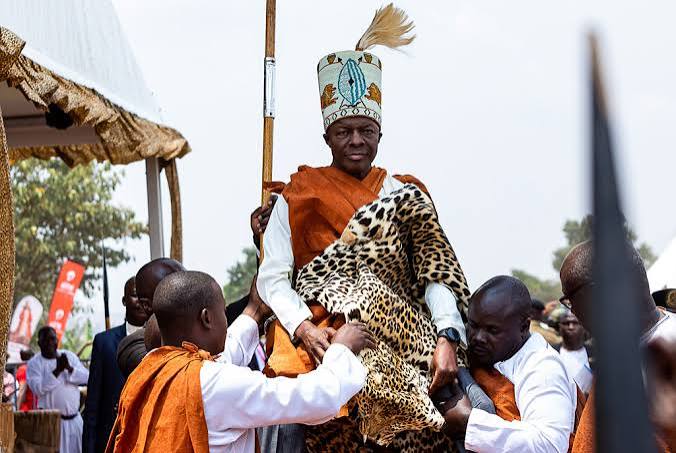
The sound of Kadodi drums echoed across the historic Bumutoto Cultural Grounds on Thursday as five young boys took the first public steps toward manhood, marking the beginning of preparations for the official launch of the 2026 Imbalu circumcision season.
Surrounded by family members, clan elders and cultural custodians, the initiates participated in a series of traditional rituals that signal the start of one of Uganda’s most celebrated cultural ceremonies. The activities also set the stage for the biennial Imbalu season, which will unfold across the Bugisu sub-region over the coming months.
The ceremony began with the boys walking in procession to a nearby stream carrying traditional clay pots. They returned with water that was poured into an earthen vessel containing fermented maize flour, known locally as kaked, to prepare a ceremonial brew that will mature over three days.
For the Bagisu, also known as the Bamasaba, the brew carries deep cultural meaning. It is prepared alongside the initiates’ final days of instruction and becomes an important part of the ceremonies leading to circumcision.
Nearby, mothers and other female relatives carefully ground soaked yeast using traditional stones before adding it to the mixture. The process was carried out with reverence, reflecting the important role women play in supporting the cultural rite.
Elders later smeared the soaked yeast onto the initiates, a symbolic act that publicly identified them as candidates preparing for circumcision and formally ushered them into the initiation process.
The boys were then entrusted to relatives and cultural mentors who will spend the next three days guiding them through traditional teachings, community engagements and activities designed to build confidence before the ceremony.
Bagisu elders describe the opening rituals as a defining moment because, once completed, an initiate is expected to continue the journey without turning back.
“This is the point of no return,” one elder said.
“Once these rituals are performed, the initiate has committed himself before the ancestors, the clan and the community. During these three days we observe each candidate closely. Some arrive mentally strong while others still show fear, but through continuous encouragement, dancing, counselling and traditional drills, they all gain the courage required before circumcision.”
Following the ceremonies, the initiates set off on visits to relatives’ homes accompanied by energetic Kadodi drumming and dancing. The visits allow family members to offer words of encouragement, prayers and gifts before the boys undertake the final stage of the rite.
Relatives traditionally present goats, chickens and other livestock as a sign of celebration and recognition that the initiates are preparing to assume adult responsibilities within their families and communities.
Throughout the preparation period, mothers, sisters and aunts remain at the center of the celebrations, singing and dancing alongside the initiates to strengthen their resolve. Elder brothers also play an important role by leading traditional drills and ensuring the boys remain mentally prepared.
The ceremonial brew will continue to ferment over the next three days, mirroring the initiates’ own period of preparation.
On Saturday, both journeys will reach their conclusion when the brew is ready and the five boys publicly undergo circumcision at Bumutoto, officially launching the 2026 Imbalu season.
Held every even-numbered year, Imbalu is more than a rite of passage. The centuries-old tradition has become one of Uganda’s most prominent cultural events, drawing thousands of participants, visitors, researchers and tourists to the Bugisu region. Beyond preserving the heritage of the Bagisu people, the celebrations provide a boost to local businesses and tourism, reinforcing Mbale City’s status as the cultural heart of the Imbalu tradition.