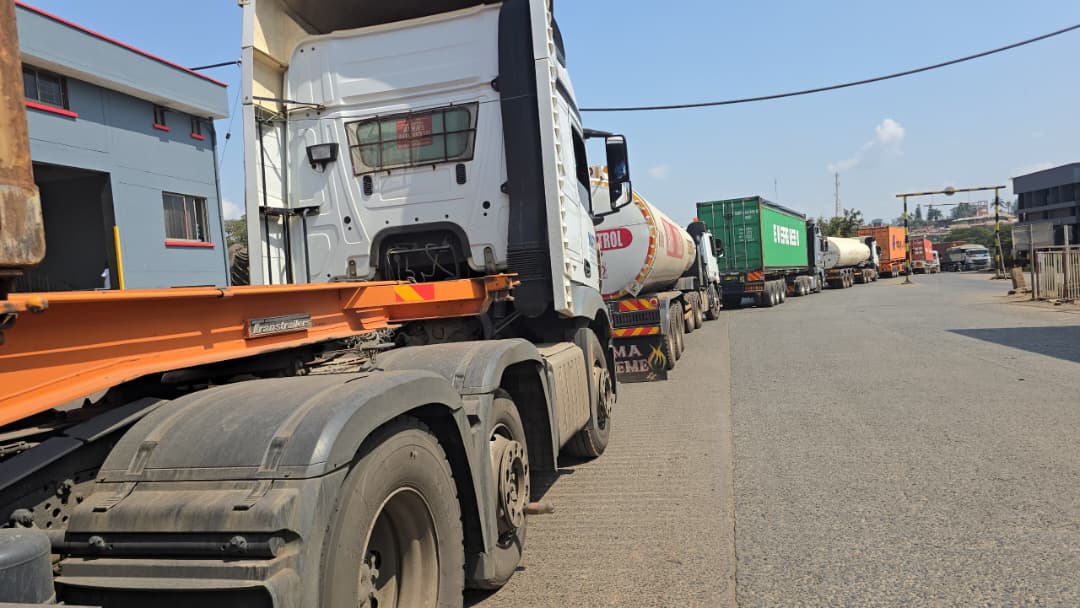
A massive traffic jam stretching nearly 35 kilometers into neighboring Kenya has slowed the movement of goods through the Malaba border crossing, with transporters and freight operators blaming recent changes in cargo monitoring procedures.
The congestion, now in its third day, has affected one of East Africa’s busiest trade corridors, leaving hundreds of cargo trucks stranded as they wait to enter Uganda.
Truck drivers, transport companies and clearing agents say delays began after the Uganda Revenue Authority reinstated the use of metallic electronic cargo seals for goods entering the country. They argue that the renewed inspection and sealing process has reduced the number of trucks cleared each day, creating long queues on the Kenyan side of the border.
The slowdown has sharply reduced activity at the Ugandan section of the crossing, where fewer vehicles than usual are arriving after completing border formalities.
For many drivers, the delays have meant spending days parked along the highway, waiting for clearance. Long periods on the road have disrupted delivery schedules and increased transport costs for companies that depend on the Northern Corridor, a critical route linking the Kenyan port of Mombasa to Uganda and several landlocked countries in the region.
Malaba serves as a major gateway for imports destined for Uganda, Rwanda, South Sudan and the eastern Democratic Republic of Congo. Any prolonged disruption at the border can affect supply chains, delay deliveries and increase the cost of moving goods across the region.
The latest congestion has renewed concerns among transporters about the need to balance customs enforcement with efficient cargo movement. Freight operators say predictable border procedures are essential to keeping regional trade flowing and avoiding costly delays for businesses and consumers alike.